Saving an under performing product
Designing a community-driven platform for dog owners that aggregates expert advice, curated content, and user-generated posts to create an engaging social hub centred around dog care and shared experiences.
Role
Lead Product Designer
Product
Community-driven Platform
Platforms
iOS · Responsive Web
Focus Areas
UX, Visual Design, Brand, Design System
Overview
TeamDogs was a community-driven hub for dog owners, aggregating expert advice on care and behaviour, curated articles, community recommendations, and user-generated content. When I joined, the product faced stagnant growth and low engagement.
My role was to lead the redesign and reposition the product around community value, optimising key user journeys while establishing a coherent visual and interaction language across the platform. My work spanned research, UX strategy, brand refinement, and the creation of a scalable design system.
The Challenge
Upon team restructuring, we identified several critical issues:
- Confusing navigation and inconsistent information hierarchy
- Low engagement with core content and features
- A visual identity that failed to communicate community value
Our success metrics were clear: increase page views, improve user engagement with content, and drive user registrations — all directly tied to long-term product viability.
Research & Discovery
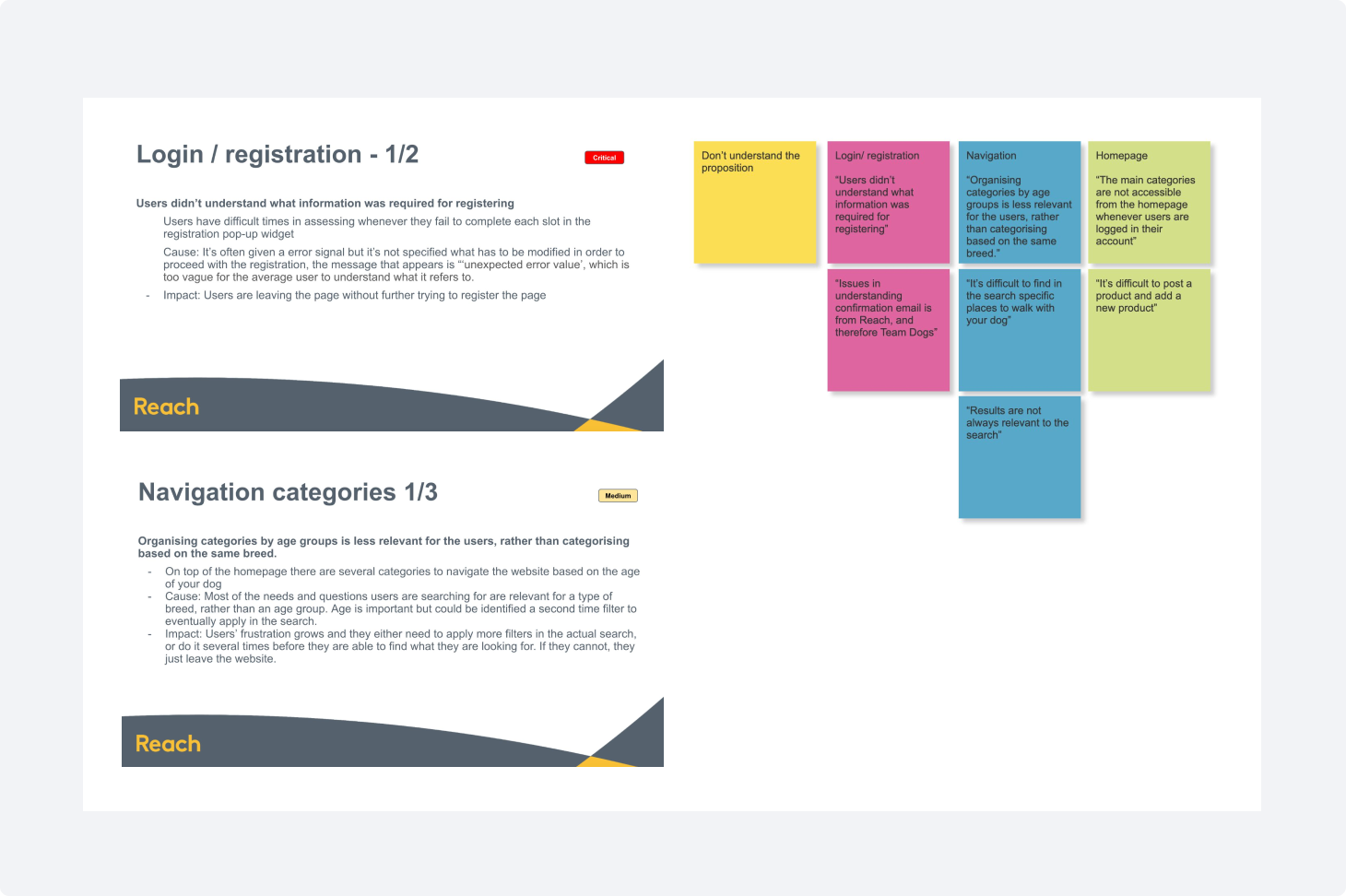
Collaborating closely with our UX researcher, I ran multiple rounds of user interviews to uncover behavioural patterns and pain points. These qualitative insights were mapped against usage data provided by our data analyst, enabling us to prioritise design opportunities by impact.
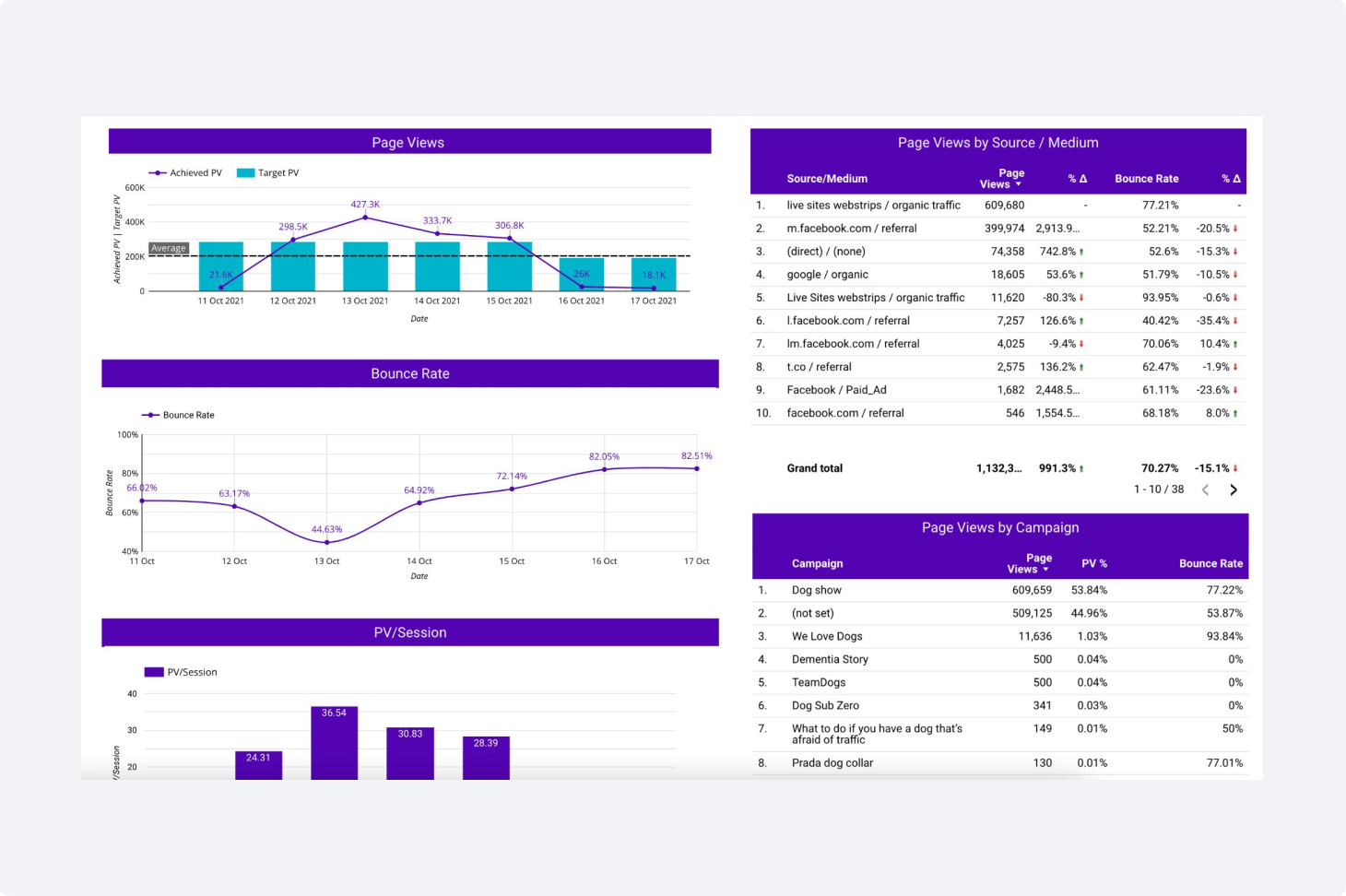
Weekly data sessions allowed me to turn raw analytics into actionable insights, guiding iterative design decisions and validating changes with real behavioural trends rather than assumptions.
Rebranding & Visual Refresh
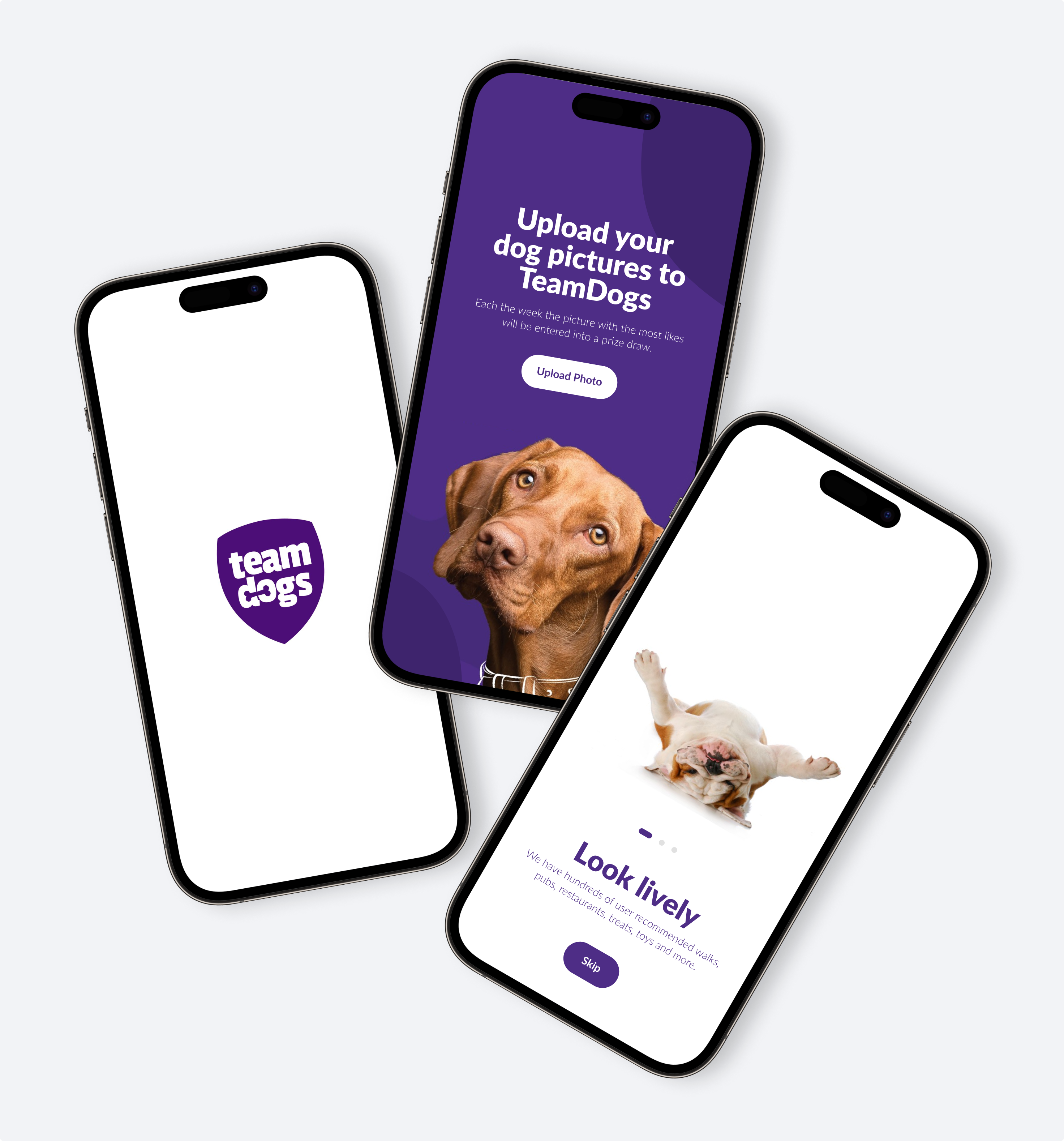
A critical early initiative was rebranding the experience to better reflect TeamDogs' ethos as a community platform rather than a static information feed. This included:
- A new logo with a stronger sense of unity and community
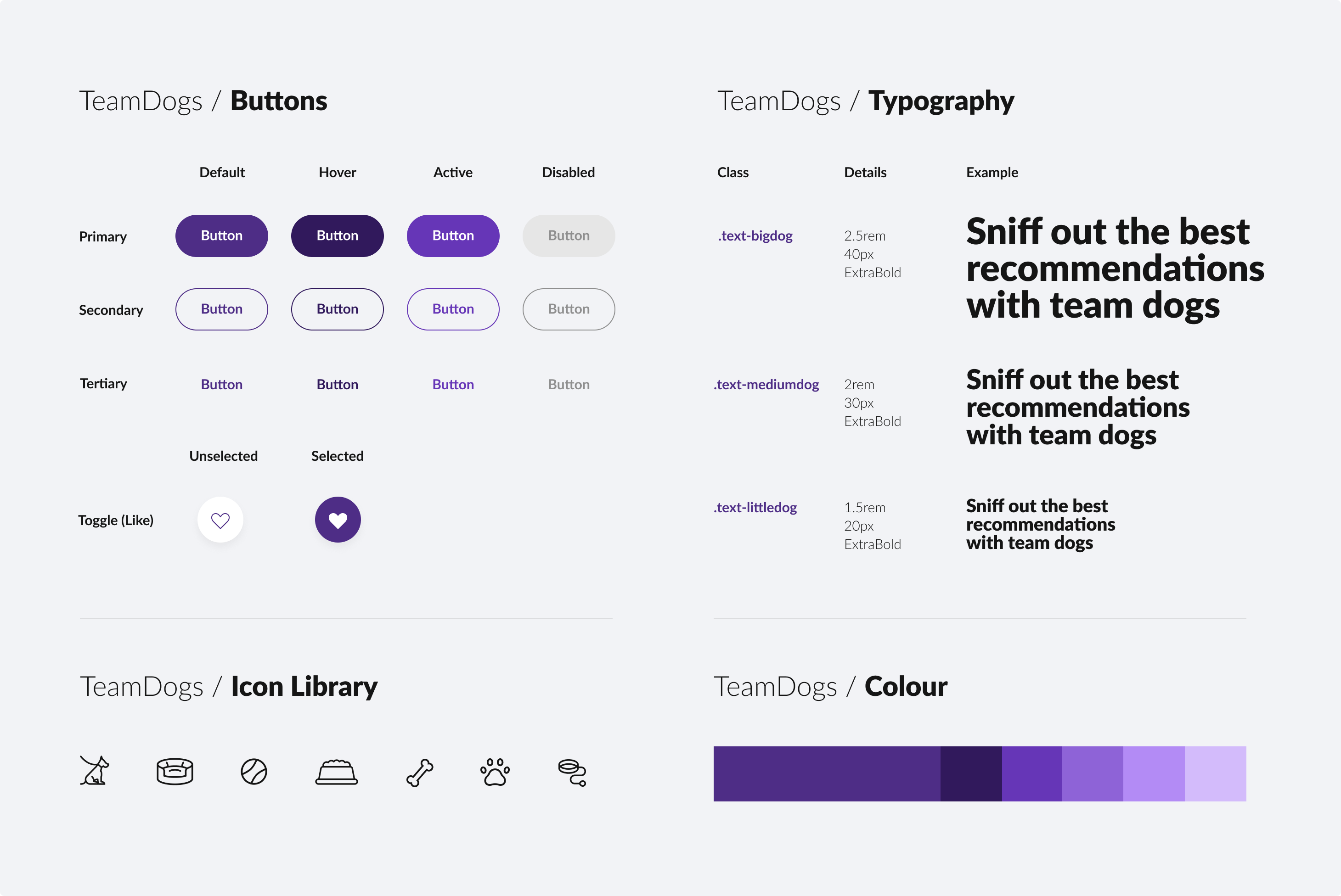
- Updated typography and colour systems aligned with emotional engagement
- A more welcoming editorial tone
We documented all guidelines in Frontify to ensure editorial, marketing, and product teams shared the same brand understanding and assets.
Design System & Components
To improve consistency and delivery speed, I developed a modular design system encompassing:
- Core UI elements — buttons, form fields, icons, shared styles
- Layout templates for key pages
- Reusable interaction patterns for galleries, navigation, and content cards
This system dramatically reduced design and development friction and enabled quicker iteration cycles.
Prototyping & Validation
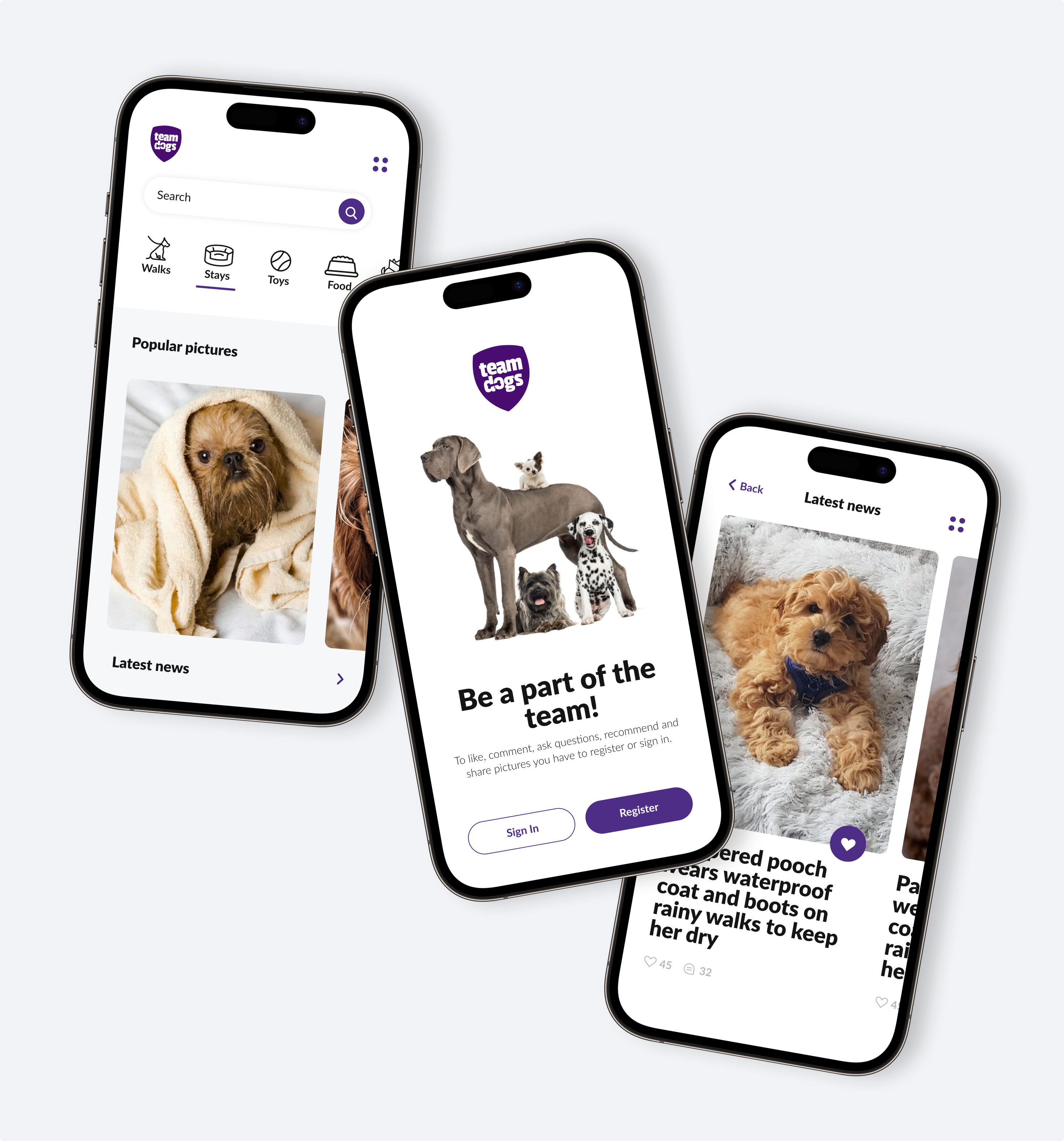
Before committing to full development, I produced interactive prototypes to:
- Communicate redesigned journeys to stakeholders
- Validate assumptions with early user testing
- Present proposed ad placements to the revenue team
These prototypes ensured alignment between design intent and development implementation.
Feature Improvements & Outcomes
Photo Galleries Redesign
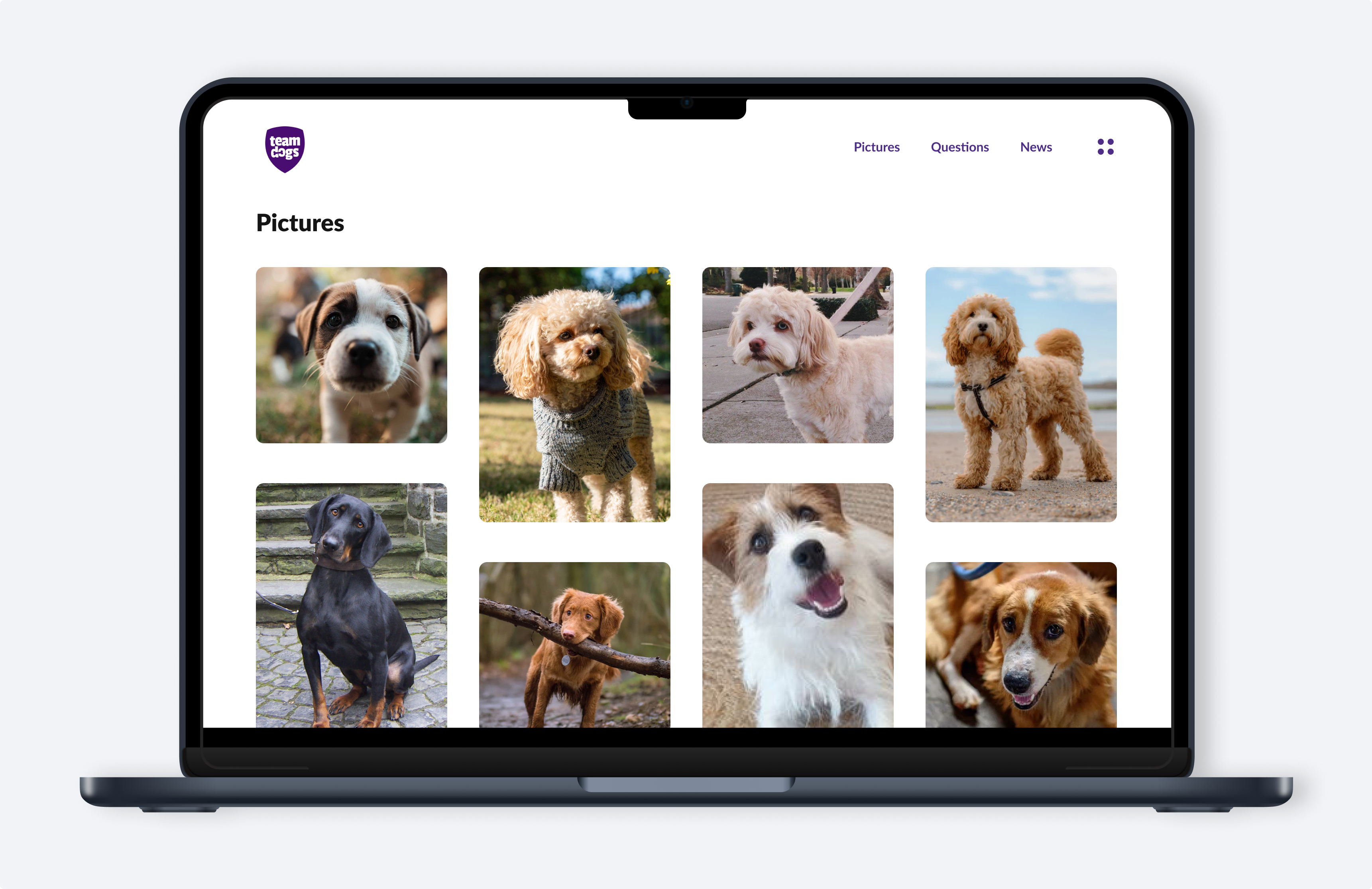
The original masonry grid for dog photos generated long scroll times but minimal engagement. Through user interviews and data evaluation, we identified users enjoyed browsing but weren't compelled to interact further.
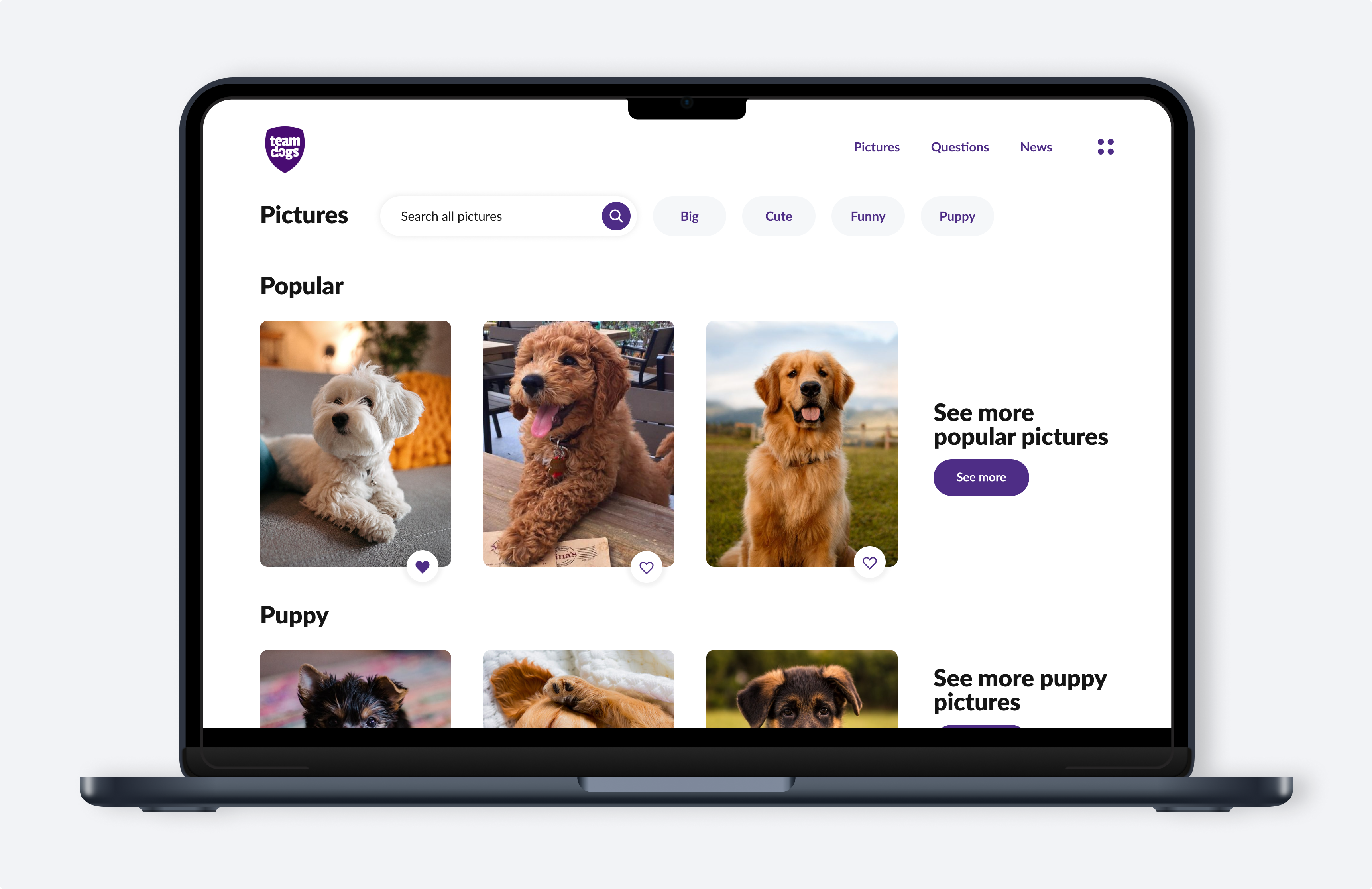
We segmented the content into thematic galleries with tagging, enabling users to filter by interest. Clear calls-to-action for liking, sharing and commenting boosted interactive behaviours and also encouraged photo uploads.
A two-week A/B test demonstrated dramatic improvements — page views increased significantly, and community interactions rose across the board.
Enhanced Discovery via Categories
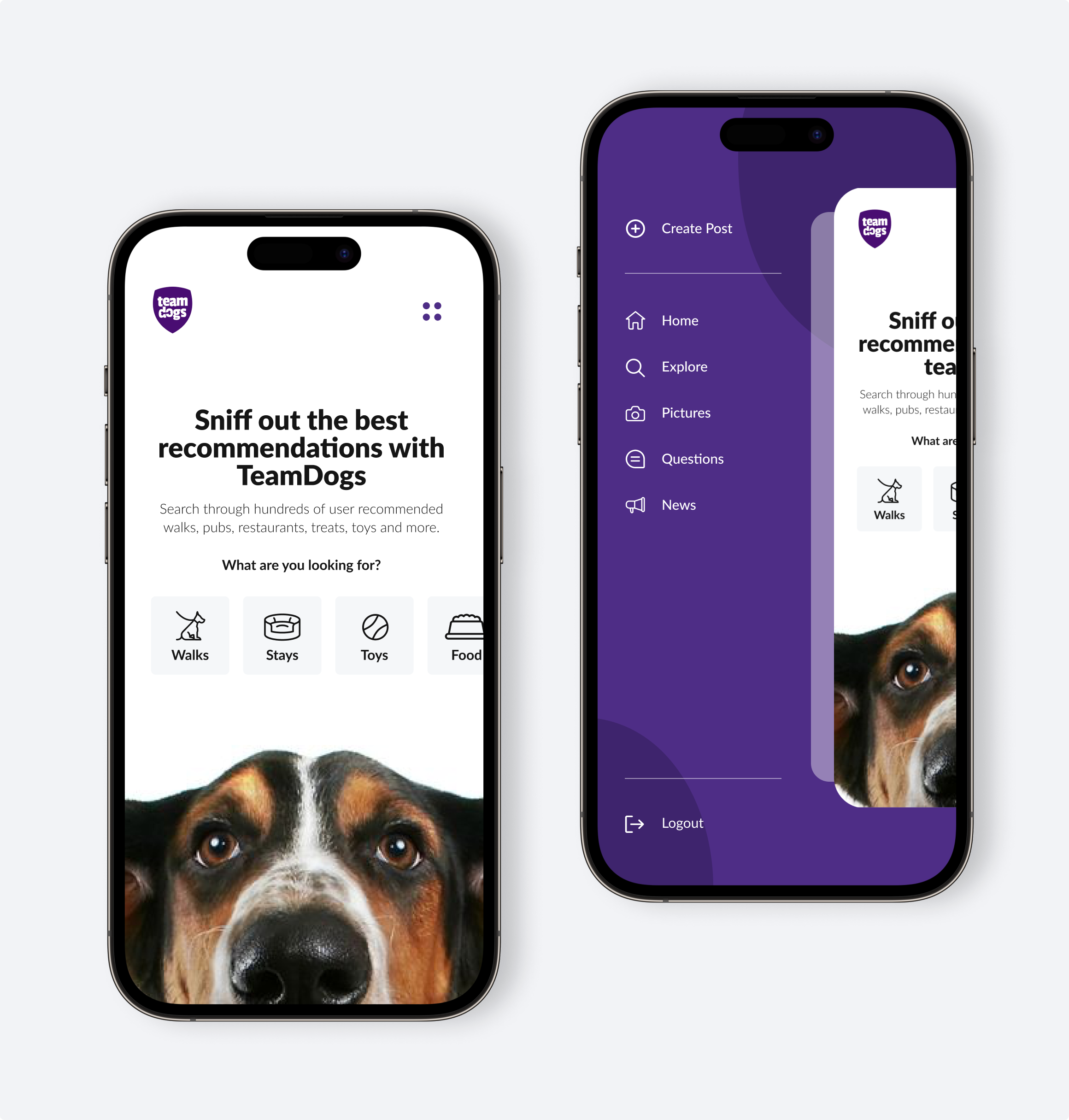
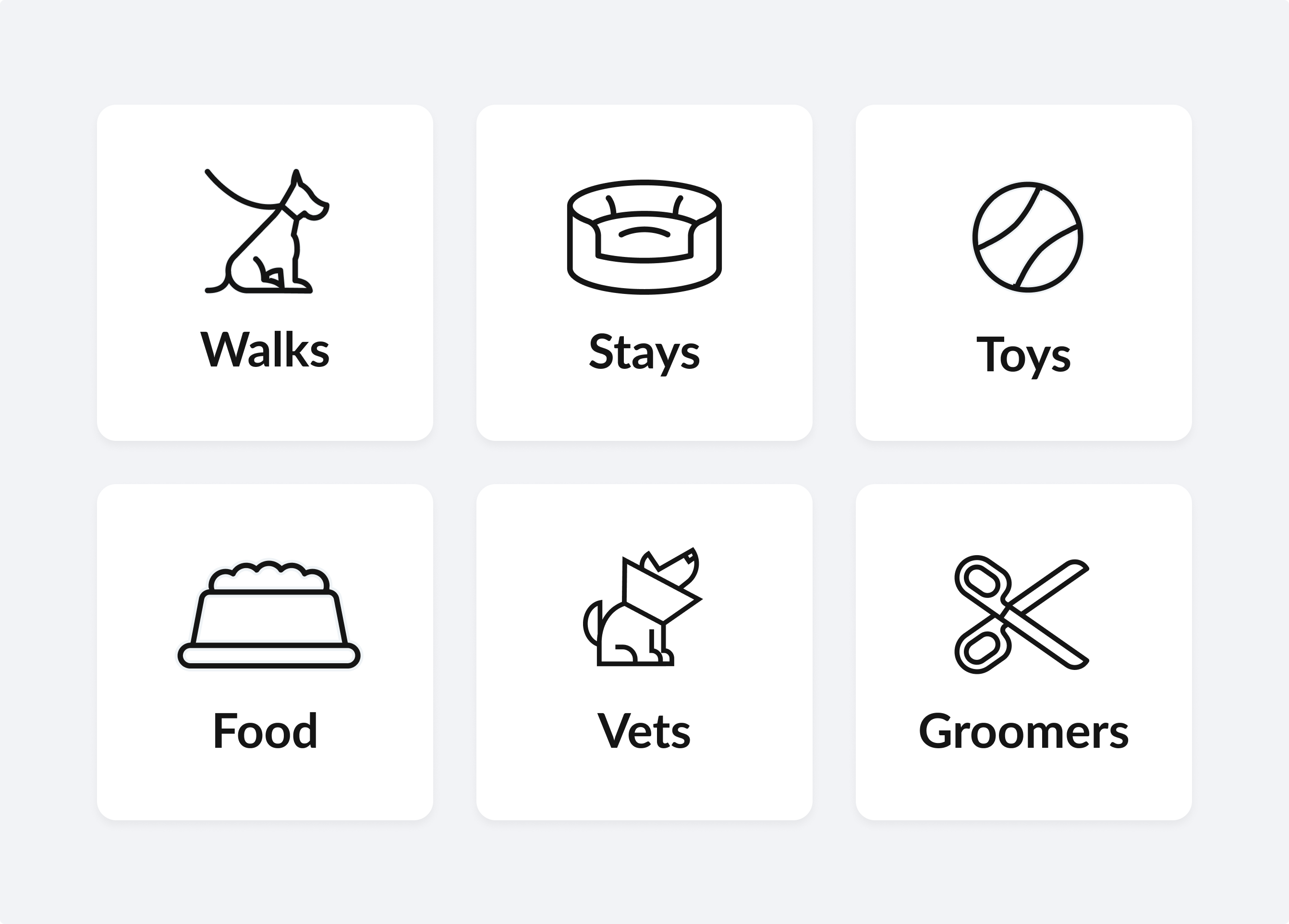
Together with our data analyst and content team, we surfaced popular recommendation categories with iconography and improved navigation. This structural change simplified discovery and reduced friction for users seeking specific content.
Handoff & Implementation
Final designs were delivered via Figma with fully annotated components and style documentation. Confluence was used for specification sharing, while close coordination with engineering ensured consistency in implementation.
Component reuse reduced development efforts, and dedicated QA reviews ensured visual fidelity — all tracked through JIRA.
Reflection & Learnings
This project reinforced critical principles in product design:
- Data + qualitative research yields the best insights — never design in isolation
- Consistency scales teams and outcomes — design systems are as strategic as they are practical
- Structured validation breeds confidence — A/B testing enabled us to back decisions with measurable impact
This comprehensive redesign transformed TeamDogs from a stagnant site into a more engaging and sustainable community platform.